How to Perform Remote identification and Verification?
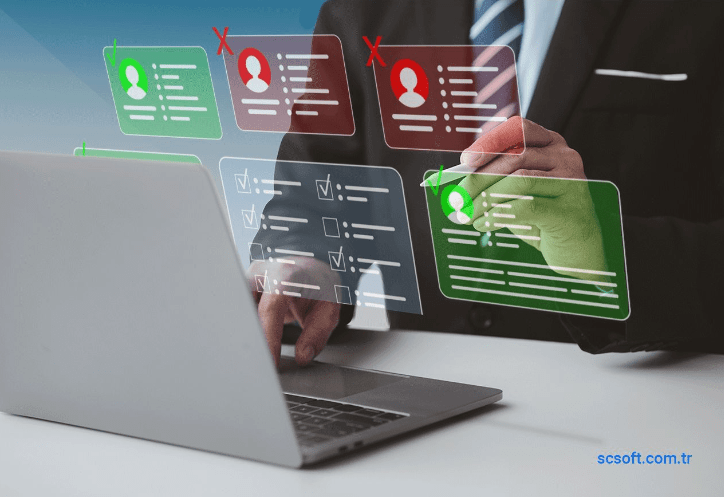
Remote identity verification is a method of verifying an individual’s claimed identity from any remote environment. Remote identity verification ensures that the person applying for services, opening an account, or requesting access to a platform is who they claim to be and has the authority to proceed with the transactions.
Today, remote identity verification is widely used in the KYC (Know Your Customer) process by institutions to identify applicants. A secure and privacy-compliant method of remote identity verification enables a wide range of activities such as conducting financial transactions, opening accounts, and submitting applications.
Why Is Remote Identity Authentication Necessary?
To prevent identity fraud and minimize fraudulent activities, institutions verify individuals’ identities. Sometimes, individuals must visit institutions physically to obtain services or submit applications. This can lead to various logistical challenges. For instance, individuals might not be in the same city as the institution they wish to engage with.
In today’s world, where remote work and remote education have rapidly increased, traditional methods are inefficient and bring burdens such as travel, time loss, and waiting in lines.
Remote identity verification addresses these challenges. It allows individuals to verify their identity online through web or mobile channels without the need to visit a physical location. This enables identity verification from any environment, at any time.
How SCSoft Facilitates Remote Identity Verification
SCSoft’s identity authentication product enables secure remote identity verification using artificial intelligence and various technologies. The process can be summarized in the following steps:
- Identity Document Scanning
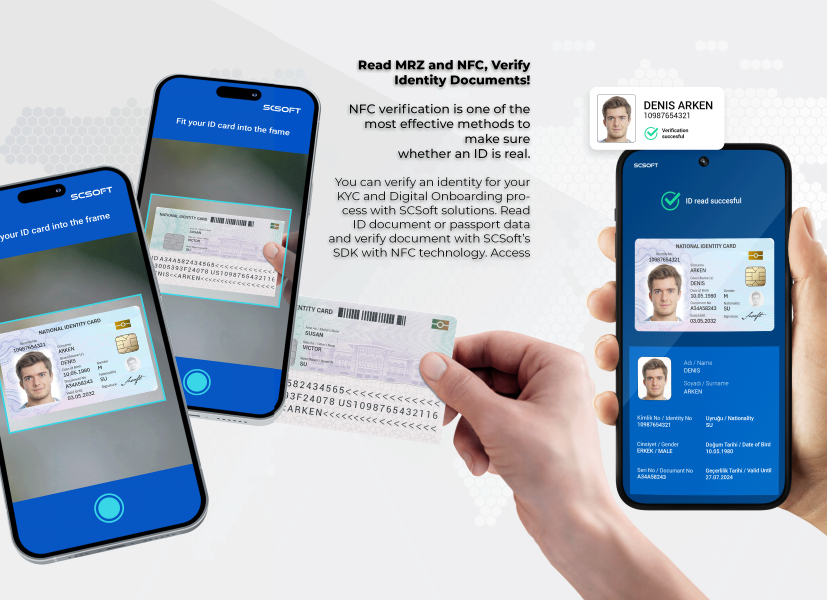
The user begins the identity verification process by scanning their identity document (e.g., ID card, passport) via a mobile device or computer. SCSoft’s product uses OCR (Optical Character Recognition) technology to automatically extract data from the document. If the mobile device supports NFC, the data embedded in the chip of the identity document is read using NFC scanning. - Facial Recognition and Biometric Verification
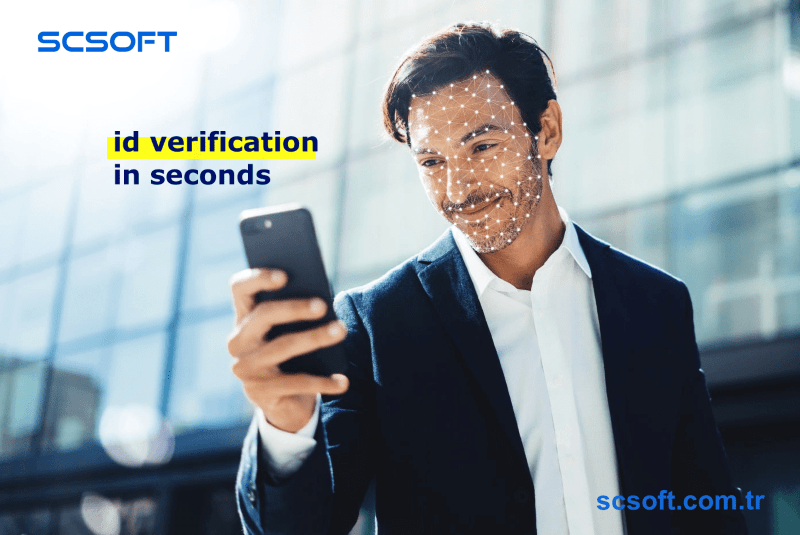
The user completes the facial recognition step by looking at the camera. AI-powered biometric authentication compares the live image of the user with the photo on the identity document, ensuring the person is the same as the one on the document. - Liveness Detection
To prevent spoofing attempts using fake faces or photographs, liveness analysis is conducted. The system verifies that the individual is a live person by using motion detection or anti-spoofing tests. - Age and Gender Verification
The system performs additional verifications, such as age and gender, based on the user’s image. This feature ensures consistency with the information on the identity document. - Data Storage
After completing the identity verification process, all collected digital data is securely stored on the relevant institution’s server.
This process can be integrated into mobile platforms or web applications using SCSoft’s SDK, enabling customers to perform remote identity verification. Additionally, if required, live video calls can be incorporated to conduct identity verification through real-time video interaction.